
At the risk of losing the reader from the start, I want to share the conclusion as the intro:
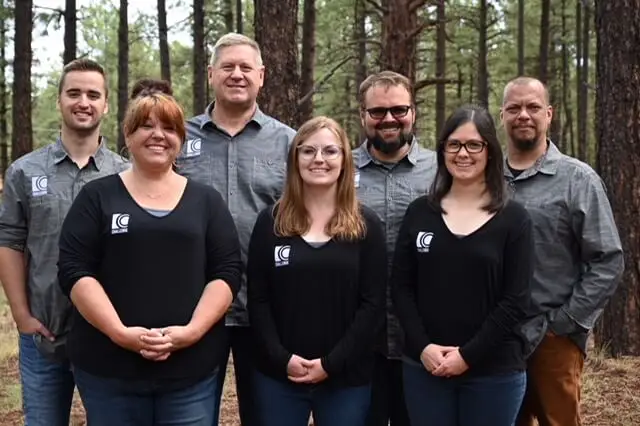
“Calling a staff a team doesn’t make it one.”
Likewise, everyone that is given the title “Team Leader” is not automatically a “Team Leader”. A team that excels corporately cannot be legislated, mandated, or assumed in any way. The synergistic energy of a healthy team is an almost magical thing where accomplishments are both more and better than a group of individuals each doing their own thing. A team must be nurtured with sensitivity, empathy, and intent. That effort must be ongoing. The responsibility of the leader is to create and maintain an environment where a team may potentially form over time. This means the team leader should have a clear understanding of the vision for the team as well as the motivations and skillsets of the individual members. In this regard, leading a team is much more akin to an art than it is a science. There is no guaranteed list of actions that the leader may follow with complete certainty to ensure a team. Rather, the leader must prove adept at perceiving the changing dynamics of tasks and interpersonal relationships, choosing to guide the interactions in such a way as to create an environment where a team may form and maintain its identity as a team.
Are there lessons upon which a potential leader can remain focused to improve the formation of their team? Certainly, there is more than this brief article will contain. (For a list of 15 Telltale Signs, check out “Leading from the Middle” by Scott Mautz).
The following are 7 decisions that the leader will make that may determine whether his/her “staff team” ever reaches its fullest potential
- Who will be on the team? This seems like such a simple thing but the only thing worse than no person in a position, is the wrong person in a position. A team member has to fully fit both the shared task as well as the shared “personality” of the team. This may require self-examination and reflection that approaches painful in its honesty. But due diligence at the beginning of a collaboration may avoid painful experiences later. The best teams avoid members that have less and greater value. The best leaders avoid having favorite members. That type of intentionality rarely happens by accident.
- Will you allow everyone to share and shape the vision? How many times have leaders decided what is best for everyone, passed it “down” and expected shared enthusiasm? That may be efficient, but it creates an instant barrier for a team that they must then overcome. Your team will have enough naturally occurring barriers to realizing their potential without the leader creating barriers for them. The best leaders are willing to do the messy work of engaging members and bringing them along on the visioning journey.
- Will you model your expectations? Do you want a team that is respectful of one another? Then you must show them what that looks like. Do you want a team that works hard? They need to see you work hard alongside them…as a team member and not just as a leader. Do you want them to show up? Then you must show up too. Do you want a team that doesn’t ignore problems and talks through them? You have to be vulnerable and talk through them as well. Do you want a team that cares for one another? Then they must know without a doubt that you care for them, also.
- Will you commit to being a leader more than a boss? A boss expects to be followed because of their authority. A leader earns the right to be followed because of their character. Being a boss places automatic limits on the trust that others will accede to you because of the perceived power imbalance in the relationship. A leader earns trust by consistency, fairness, and honesty.
- Can you value people over programs or products? People want to be valued for more than what they can/do produce. There is more to your team members than what you see at work. They have goals and dreams and relationships that they value beyond your work together. Recognition of that other valuable life and an effort to assist them in attaining a healthy balance may actually result in a more productive team member. A mantra that was taught to me by Dr. Harry Padgett in a college counseling class was, “If it’s important to you, it’s important”. Repeating this mantra as you try to lead, form, and maintain a team may help you remember that you are leading people…not programs. It isn’t easy. The institutional pressure that most leaders feel is centered around producing a successful program or product. A quantifiable product may be the institutional measuring stick used to evaluate your role. That is the pressure of position…and it’s real. Your best chance of success as a team leader is in forming a healthy, effective staff team. Take care of the people and the programs will often occupy their rightful, healthy place.
- Will you really be a servant leader? Are you willing to become less and elevate your team, individually and corporately, more? Is this team….are these people worth spending a significant portion of the currency of your life? Can you be satisfied in seeing them receive recognition and achieve success? Will that be enough for you? To answer this question, you must be honest with yourself about the person you are instead of the person you wish you were.
- Will you choose to be an isolated leader? There is an oft-used quote that is no less true because of its popularity: ”A burden shared is a burden halved” (T.A. Webb). If you are going to be the type of leader that is available for your team, you must also care for yourself. Isolated leaders tend to make increasingly poor decisions over time. Do yourself and your team a favor by finding a coach or mentor that will help you serve your team by providing honest assessment and exploration of potential blind spots. We never outgrow the need for honest, caring feedback.
Steve Roper is a Collegiate Ministries Catalyst for the Tennessee Baptists. He also works as an associate for Pinnacle Leadership Associates providing professional coaching that focuses on ministry, leadership, and transitions. You can email him at sroper@tnbaptist.org or follow him on Instagram @srroper.
